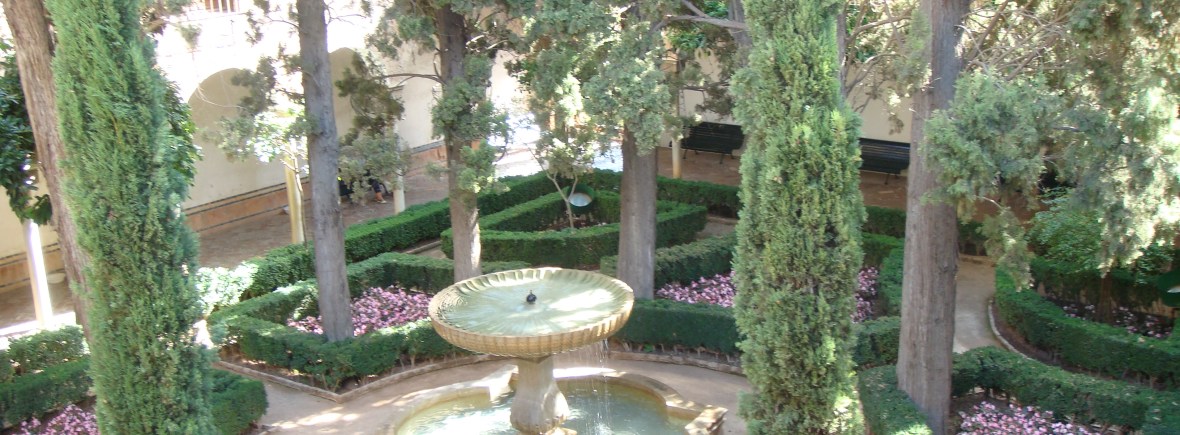
Persian gardens are the oldest recorded and documented gardens in the world. We would love to see you learn more about them, and the articles and references below are listed in the hope of introducing you to various aspects of these works of art. But before embarking on your world tour, we recommend reading A Brief History of Persian Gardens on this website as an introduction. Enjoy the journey!
Geometry plays a prominent role in the Persian garden. This article from Fine Gardening provides some interesting insights. A research article from Landscape Online, authored by Leila Mahmoudi Farahani, Bahareh Motamed, and Elmira Jamei ( Persian Gardens: Meanings, Symbolism, and Design LANDSCAPE ONLINE 46:1-19 (2016), DOI 10.3097/LO.201646) provides some scholarly information on the topic.
This article provided by UNESCO has a detailed description: “The perfect design of the Persian Garden, along with its ability to respond to extreme climatic conditions, is the original result of an inspired and intelligent application of different fields of knowledge, i.e., technology, water management and engineering, architecture, botany and agriculture.”
In 2011, the Persian Garden was registered on the World Heritage Sites Registry. This article provides an overview and description of some of the most famous gardens and why they were chosen as World Heritage Sites.
Capturing visions of the old Iran at the threshold of the modern age, Vita Sackville-West wrote in Passenger to Tehran (1926), “A desolating country! But one that filled me with extraordinary elation. I have never seen anything that pleased me so well as these Persian uplands, with their enormous views, clear light, and rocky grandeur.” Read more for a delightful description.
Several interesting videos, mostly by Western travelers, also give a glimpse into the history and philosophy behind the design of the Persian Garden.
 Ferdows Foundation, Inc.